

The Hidden Technical Secrets Behind Professional-Grade PPF and Window Tint
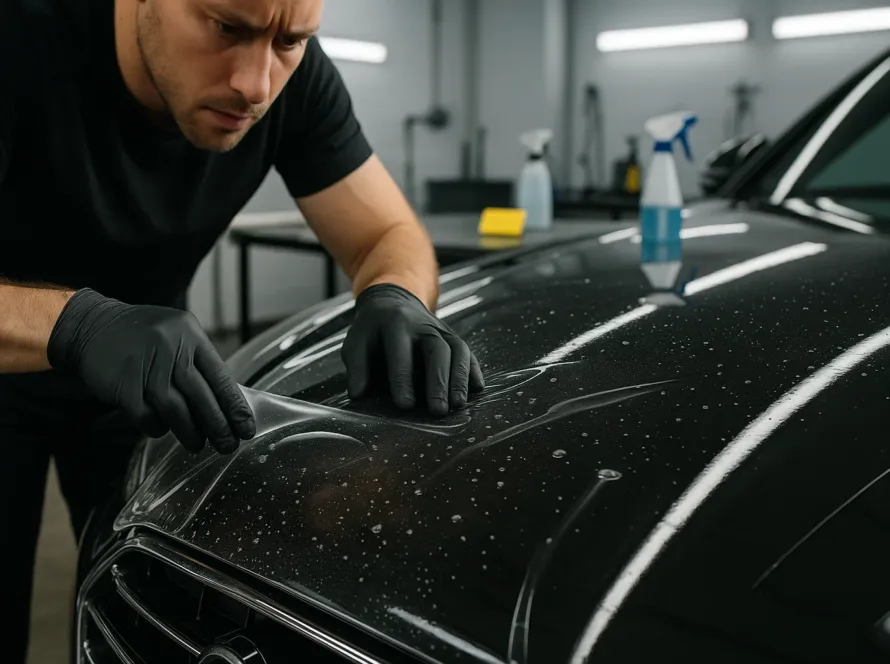
In the automotive film installation industry, nothing affects your speed, precision, and results more than how easily a film can shrink, stretch, or conform. Whether installing Paint Protection Film (PPF) or Window Tint, shrinkability directly impacts productivity, quality, and customer satisfaction.
For installers in the UAE—where extreme heat, humidity, and high-end vehicles are the norm—understanding a film’s shrink performance is essential. Poor shrink behavior turns a simple job into a stressful one, while a premium, flexible film makes the entire installation smooth and predictable.
This guide reveals the technical secrets behind shrinkable, high-performance car films and explains how choosing the right material can transform your daily workflow.
1. Why Shrinkability Matters More Than Most Installers Realize
While clarity, gloss, and thickness are important, shrinkability is the true foundation of a clean installation.
A film that shrinks properly will:
- Conform smoothly to curves and edges
- Reduce tension and prevent lifting
- Avoid wrinkles, fingers, and heat lines
- Cut installation time significantly
- Reduce material waste
- Deliver a flawless, factory-like finish
For UAE installers working on luxury vehicles daily, shrink performance isn’t optional—it’s a critical part of delivering professional results.
2. What Shrinking Actually Means in PPF and Window Tint
Many installers confuse stretching, shrinking, and heat-forming. Each of these serves a different purpose.
Stretching (PPF)
Used to pull the film gently to fit curves or corners without distortion.
Shrinking (Window Tint)
Heat causes the tint film to contract, allowing it to match the shape of the glass.
Heat-Forming (PPF)
A controlled heating method that allows the film to maintain a curved shape without tension.
Memory Recovery
High-grade films return to their natural shape when heated.
Low-quality films deform, wrinkle, or bubble.
A proper understanding of heat response is essential for professional-grade PPF installation and window tinting.
3. Warning Signs That a Film is Hard to Shrink
If a film is difficult to shrink, you will notice:
- Uneven shrinking
- Persistent fingers
- Wrinkles that do not settle
- Texture distortion under heat
- Edges lifting after curing
- Burning at normal heat gun settings
- Adhesive reacting too slowly or too quickly
Why does this happen?
- Low-quality polymer structure
- Poor heat memory
- Inconsistent film thickness
- Weak or unstable adhesives
- Climate sensitivity
UAE heat exposes flaws instantly. This is why professional installers depend on brands engineered for heat stability and controlled shrink reaction, such as Armolan PPF and Armolan Window Tint.
4. Technical Features That Make a Film Easy to Shrink
When choosing a film, look for the following specifications:
Elastic Polymer Construction
Enables smooth shrinking without cracking or whitening.
Controlled Heat Response
The film should respond gradually—not too fast and not too slow—to heat.
Stable Adhesive Layer
Allows repositioning without premature locking or floating.
Uniform Thickness
Prevents uneven shrinking or stressed areas.
Heat-Resistant Formulation
Essential for installers working in Dubai, Sharjah, and Abu Dhabi.
Films engineered with these characteristics install faster, look cleaner, and deliver consistent performance.
5. How to Test Shrinkability Before Installing
A professional installer never trusts marketing claims alone. Testing the film yourself is essential.
A. Dry Shrink Test (Window Tint)
- Clean the exterior of the glass.
- Place the tint film on top of it.
- Apply heat in controlled strokes.
- Watch how evenly the film contracts.
Good tint shrinks smoothly with no lines, burns, or distortion.
B. Heat-Form Test (PPF)
- Cut a small piece of PPF.
- Lightly warm it.
- Wrap it around a curved panel.
- Check if it holds the shape without forcing.
Premium PPF will form naturally and return to shape without orange-peel texture.
C. Memory Recovery Test
Heat the film, then let it cool.
High-grade films recover smoothly. Cheap films warp or bubble.
D. Texture Stability Test
Apply heat and inspect for gloss loss or texture changes.
Poor films degrade immediately.
6. Why Professional Films Save Time and Increase Profit
A film that shrinks and stretches easily allows installers to:
- Finish jobs faster
- Reduce mistakes and callbacks
- Use less material
- Produce cleaner edges and corners
- Increase the number of cars installed per day
In the UAE, where customer expectations are high and competition is strong, efficiency is everything.
Professional installers choose films that help them work smarter, not harder.
Armolan films are engineered for stable shrink performance in extreme climates, which helps installers deliver premium results with less stress.
7. Engineering Matters: Why Some Films Perform Better
Premium films are designed with:
- Multi-layer polymer engineering
- Precision adhesive chemistry
- UV and infrared heat resistance
- Climate-specific formulations
- Consistent manufacturing standards
This is why professional installers in the UAE trust brands that prioritize engineering and durability rather than cost alone.
8. Installation Becomes Easier When the Film Works With You
Even the best technician struggles with low-quality film.
But when the material is engineered for flexibility and heat stability:
- Your installation becomes cleaner
- Your workflow becomes faster
- Your reputation becomes stronger
- Your clients return and send referrals
Good film is not an expense. It is a business investment.
Final Thoughts
Shrinkability is one of the most important yet overlooked qualities of PPF and window tint. In the UAE’s harsh climate, choosing a film with strong heat response, memory stability, and flexible construction can make the difference between a flawless installation and a frustrating, time-consuming job.
If you want fewer mistakes, faster installations, and happier clients, start by choosing films engineered for smooth, predictable shrink performance.
Professional installers choose films that work with them, not against them.
Armolan films are built exactly for that purpose.