

In the automotive film industry, the quality of installation is just as important as the quality of the film itself. A premium Paint Protection Film (PPF) or Window Tint can easily fail if the installer makes simple mistakes during application. What most technicians don’t realize is that clients don’t judge the film—they judge the installer.
One bubble, one edge lift, or one contamination spot can cost you a returning customer, a referral, and sometimes your entire reputation. In competitive markets like Dubai, Abu Dhabi, and Sharjah, perfection isn’t optional. It’s the standard.
This article breaks down the most common installation mistakes that affect PPF and Window Tint results, why they happen, and how to prevent them through technique, discipline, and proper film selection.
1. Stretching PPF Beyond Its Limits
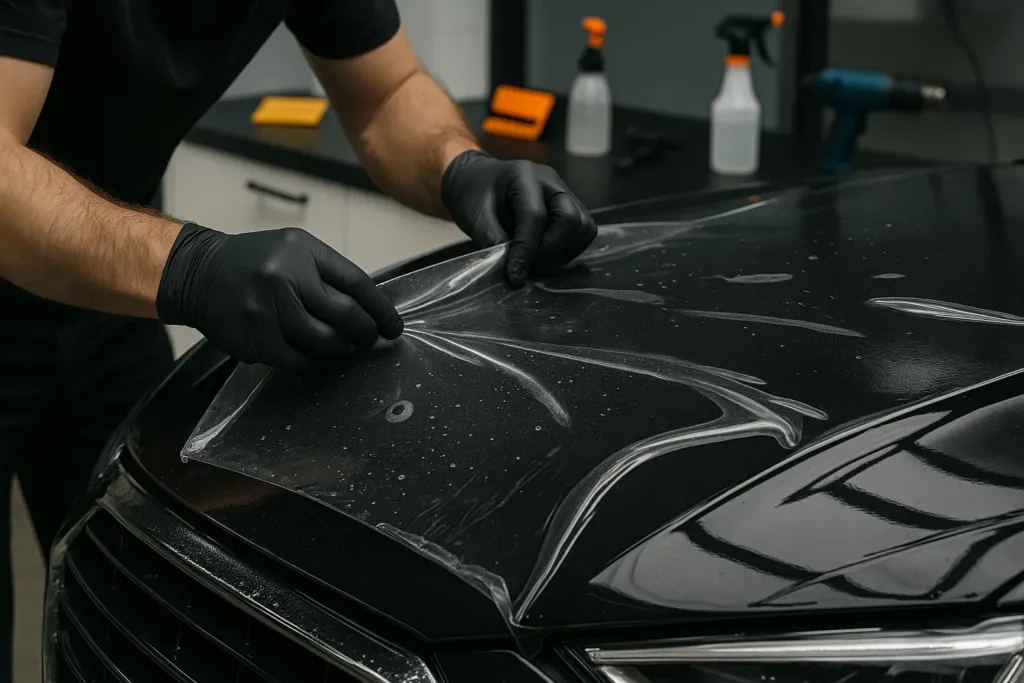
One of the most common mistakes during PPF installation is over-stretching the film. Many installers pull the film aggressively, thinking more tension gives a cleaner finish. In reality, excessive stretching weakens the adhesive, causes premature peeling, and leads to texture distortion that the client will notice within weeks.
Overstretching also causes:
- Uneven clarity
- Weak bonding around edges
- Reduced self-healing performance
- Film whitening on curved surfaces
The solution is technique, not force. A top-tier Paint Protection Film should have balanced elasticity that allows stretching without distortion. Professional PPF installation in the UAE requires films designed for heat, humidity, and complex car curves, such as bumper corners and mirror caps.
If you find yourself fighting the film, the problem is often the product—not your skill. High-quality films like Armolan PPF are engineered to stretch only as needed and return to their natural state under heat without warping.
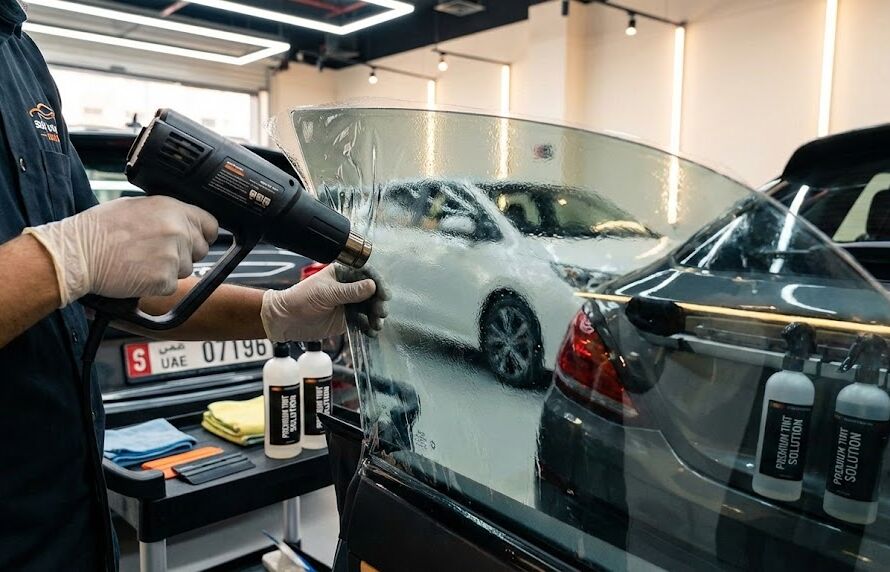
2. Poor Heat Shrinking Technique on Window Tint
Many installers underestimate the importance of proper shrinking when applying window tint. If the shrink is uneven or rushed, the film will develop:
- Ripples
- Lines
- Burn marks
- Poor curvature fitting
Window tint must shrink smoothly to match the shape of rear and side windows, especially in modern vehicles with steep curves. Incorrect heat gun distance or temperature creates irreversible damage.
Common causes include:
- Overheating a single spot
- Using a contaminated or old shrinking card
- Rushing the shrinking process
- Working in a humid or poorly ventilated environment
Professional window tint installation in Dubai demands precision. The UAE heat exposes every imperfect shrink within days. Investing in proper training and consistent technique is the only long-term solution.
3. Contamination: Dust, Fibers, Hair, and Sand
Nothing ruins PPF or window tint faster than contamination. One microscopic grain of sand is enough to create a permanent bump under the film.
Contamination usually comes from:
- Dusty work environments
- Dirty squeegees or blades
- Unclean spray bottles
- Poorly washed vehicles
- Installer clothing
- Air drafts during installation
In the UAE, fine dust and sand are constant enemies. A truly professional installer controls the environment, not the other way around. Use filtered water, clean microfiber towels, sealed tool containers, and a closed installation bay with proper lighting.
Professional installers also wear lint-free clothing to reduce airborne contamination.
4. Incorrect Use of Slip and Tack Solutions
PPF installation relies heavily on balanced slip and tack solutions. Too much slip prevents adhesion. Too much tack creates permanent anchor points before the film is aligned.
Incorrect mix ratios cause:
- Adhesive failure
- Bubbles
- Silvering
- Edge lifting
- Poor clarity
The rule is simple: follow the recommended ratios for your film brand. Each PPF formula reacts differently to soap or alcohol mixtures, especially under UAE temperature conditions.
Reliable films like Armolan PPF are engineered with adhesives that respond predictably to slip and tack, giving installers more control and reducing installation errors.
5. Cutting Mistakes: Blade Marks and Inconsistent Lines
Cutting mistakes are one of the fastest ways to lose credibility. Blade slips can damage paint, the film, or rubber seals.
Common cutting errors include:
- Using dull blades
- Cutting directly on the paint
- Inconsistent pressure
- Cutting too deep around headlights or vents
- Leaving jagged edges
Invest in fresh blades daily. Use soft squeegees for guidance. And most importantly, rely on pre-cut kits or plotter-cut templates when possible. Not only do they speed up installation, they also guarantee consistent precision.
6. Overheating During Installation
Heat guns are essential tools, but they are also dangerous when used incorrectly. Overheating leads to:
- Film distortion
- Adhesive burns
- Texture changes
- Lost clarity
- Weak bonding
Many installers use heat to force the film into place, instead of letting the film’s elasticity do the work. Good PPF doesn’t need aggressive heat. It needs controlled, even warming.
This is especially critical in the UAE, where films are already exposed to extreme outdoor temperatures.
7. Working Too Fast to Save Time
Speed is important, but rushing destroys quality. Mistakes caused by hurry include:
- Misalignment
- Stretch marks
- Bubbles
- Dry spots
- Incomplete squeegee strokes
Clients in the UAE expect premium results. They don’t care if you finish in one hour or four—they care how the film looks six months later. Focus on precision, not speed.
Quality always pays off more than quantity.
8. Installing in Poor Lighting Conditions
Lighting is one of the most overlooked factors in film installation. Many installers work under weak fluorescent lamps or rely only on natural light.
Poor lighting hides:
- Dust particles
- Microbubbles
- Streaks
- Edge gaps
- Stretch marks
A professional installation bay should have strong, diffused, shadow-free lighting. LED strip lights positioned along walls and ceilings help installers identify imperfections immediately.
9. Using Low-Quality Films
Even the best installer will fail with low-quality film. Cheap films do not handle heat, stretching, shrinking, or adhesive bonding properly.
Low-quality films cause:
- Early discoloration
- Peeling edges
- Bubbles within weeks
- Weak UV protection
- Poor shrink behavior
- Difficult removal
Professional installers in the UAE prefer working with films engineered for extreme climate conditions. Armolan PPF and Armolan Window Tint offer balanced adhesive, smooth installation behavior, and long-term stability, which helps installers avoid callbacks and maintain their reputation.
10. Lack of Training and Inconsistent Technique
Film technology is evolving. Modern PPF and tint films require updated techniques. Installers who rely on old habits often struggle with new adhesives, shrink behaviors, or protective coatings.
Regular training keeps your skills sharp and your installations consistent. Armolan’s technical training programs help installers master advanced installation processes, avoid mistakes, and deliver world-class results.
Final Thoughts
Mistakes during PPF and Window Tint installation are costly—not because of the material wasted, but because of the damage they do to your reputation. One bad review, one failed job, or one peeling corner can cost you dozens of potential clients.
The foundation of a successful installation business in the UAE is simple:
Precision. Discipline. Professional film.
Choose the right tools, maintain a clean environment, use premium-quality films, and never rush the process.
Your reputation is your brand. Protect it as carefully as your clients protect their cars.